
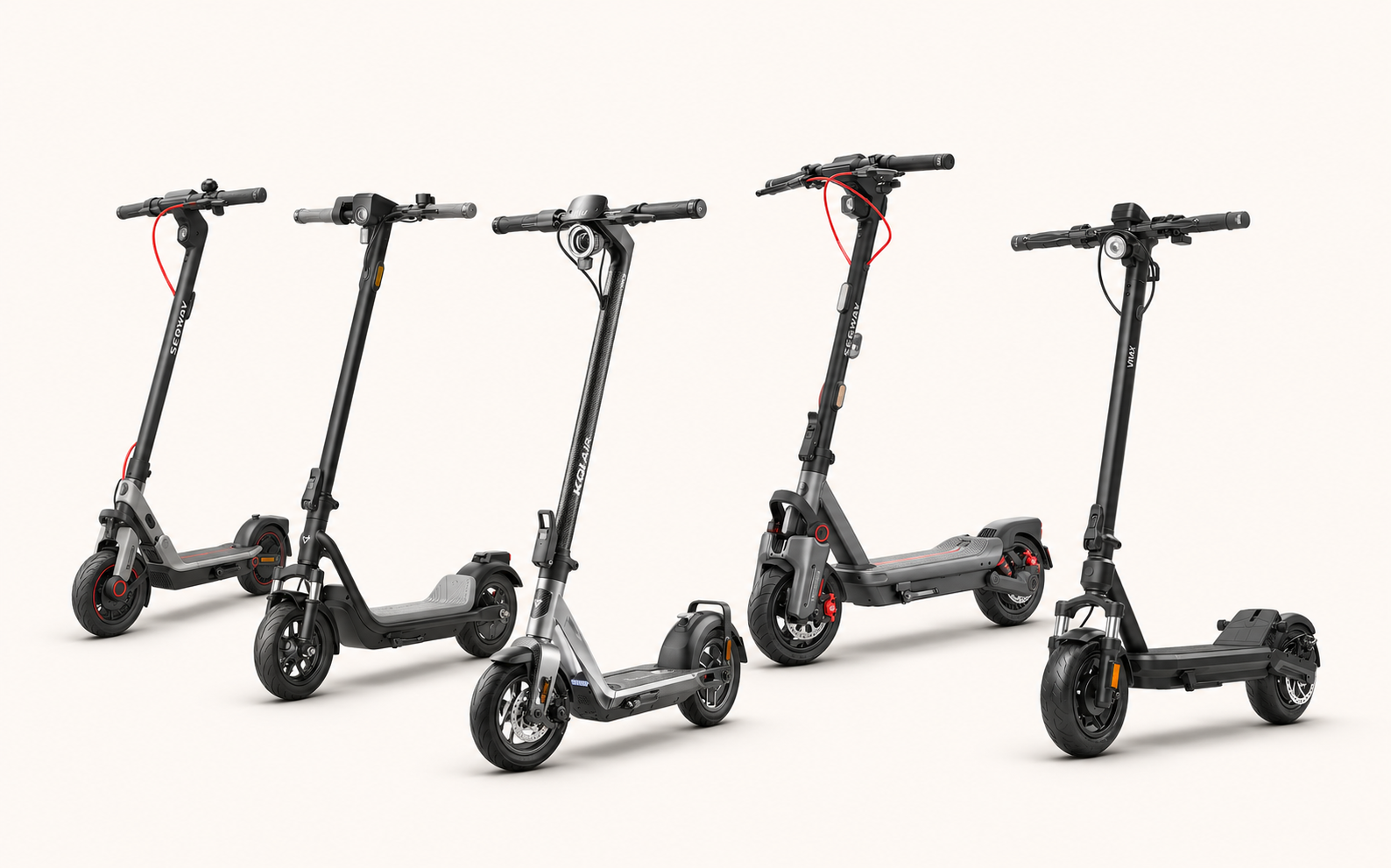
Start with what you need to carry
For daily stairs, we'd buy the NIU KQi Air. It costs $899, about $300 more than the Segway E3 Pro, but saves 13.9 pounds and adds 23% more listed battery capacity. The Air has no suspension. For a route with frequent broken pavement, we would consider one of the suspended models below.
If you can roll straight out of storage, extra weight is easier to accept. The KQi 100F costs $399 and folds its handlebars into a narrow package. Around $1,200, the VMAX VX2 Hub LR carries a larger battery than the MAX G3 Plus at almost the same weight. The Segway's appeal is its 11-inch self-sealing tires and hydraulic suspension at both ends.
Compare the five picks
| Scooter / best for | Price | Weight | Battery capacity | Design tradeoff |
|---|---|---|---|---|
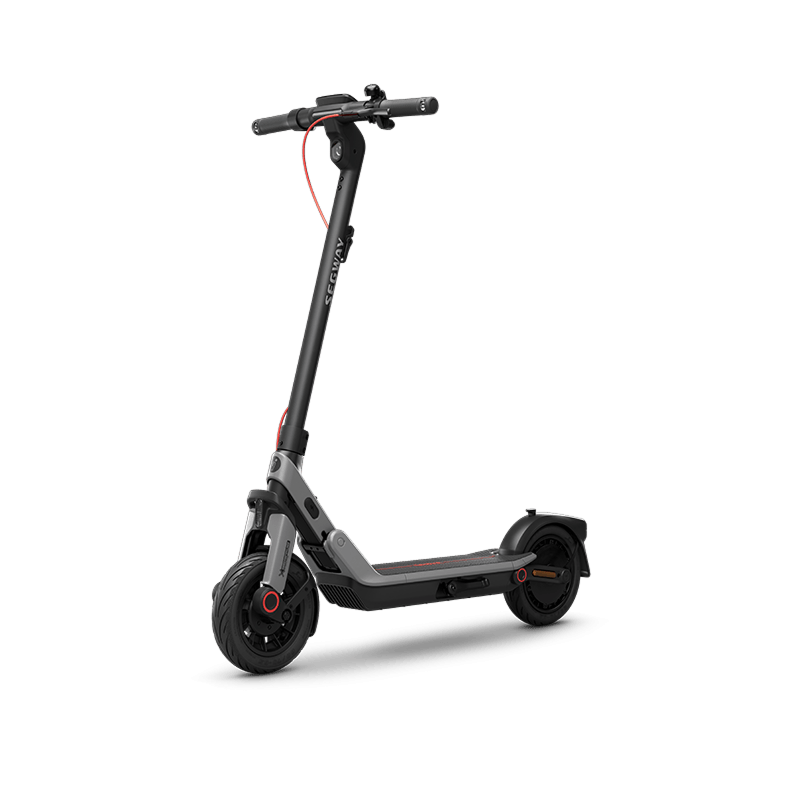 Segway E3 ProSuspension at about 40 lb | $599.99 | 40.1 lb | 368 Wh | 22.2-inch folded width |
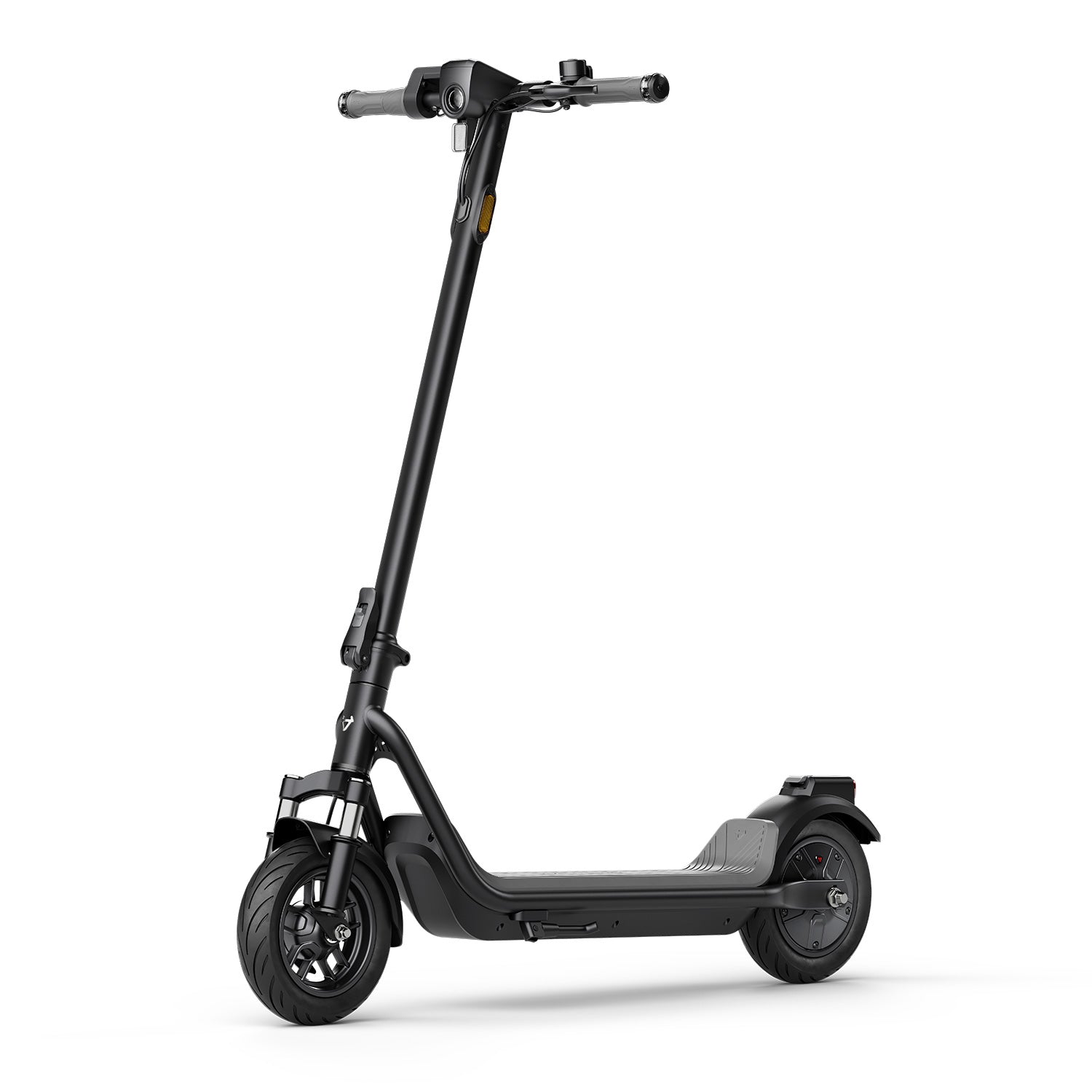 NIU KQi 100FBudget and narrow storage | $399 | 38.8 lb | 243 Wh | Front suspension only |
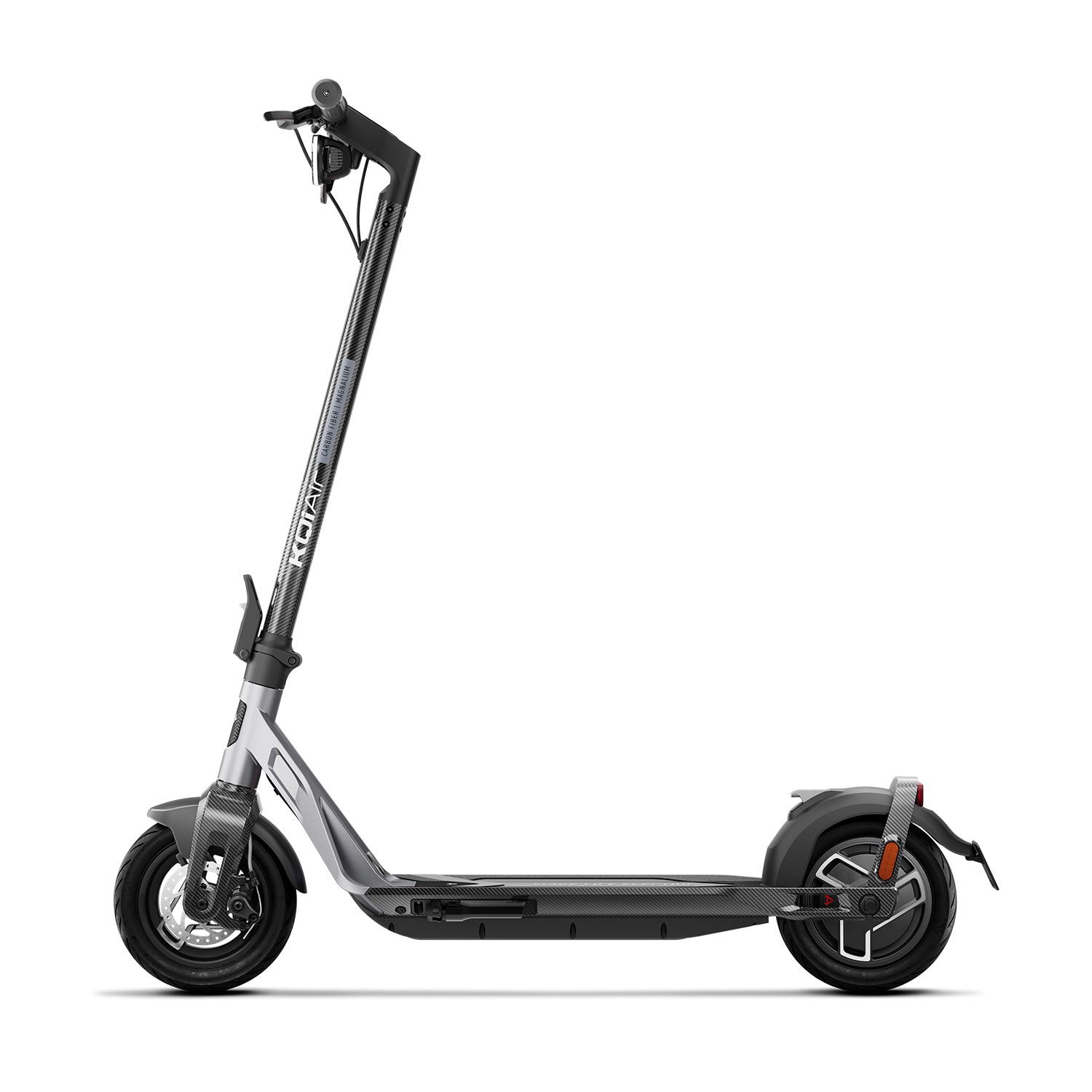 NIU KQi AirDaily carrying | $899 | 26.2 lb | 451.2 Wh | No suspension |
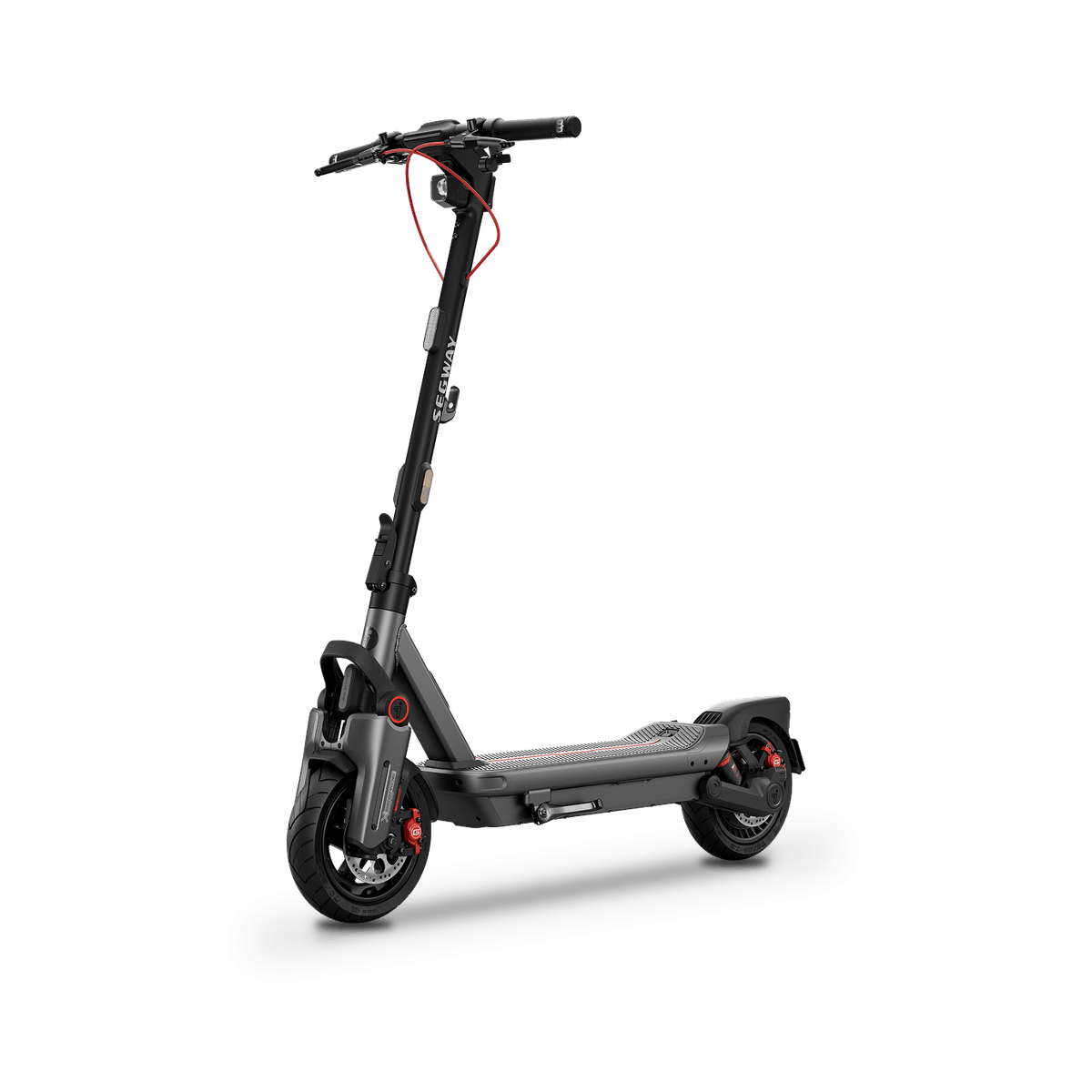 Segway MAX G3 PlusLarger tires and hydraulic suspension | $1,199.99 | 56 lb | 717 Wh | Less capacity than the VMAX |
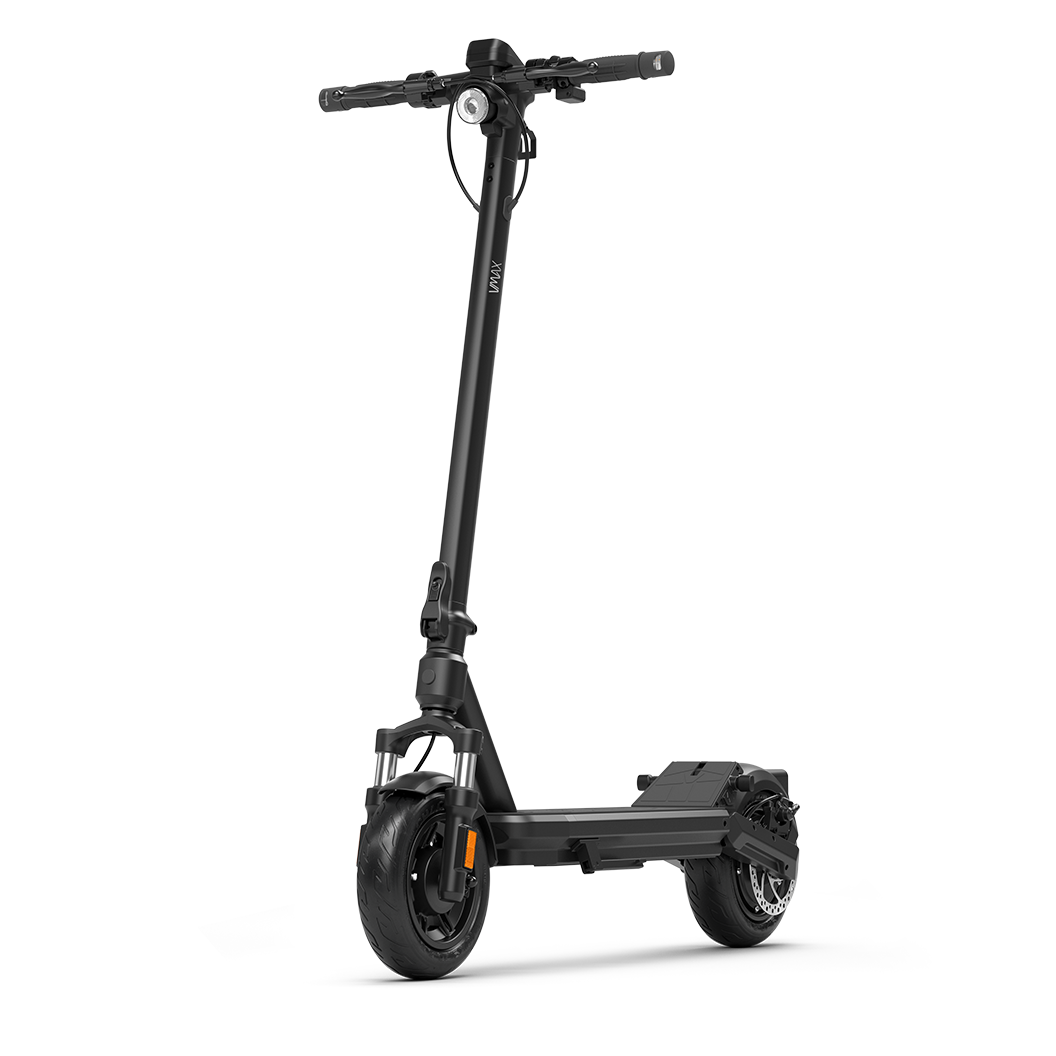 VMAX VX2 Hub LRCapacity around $1,200 | $1,189.10 | 57.1 lb | 874 Wh | Rear elastomer suspension |
Segway E3 Pro for suspension at about 40 pounds
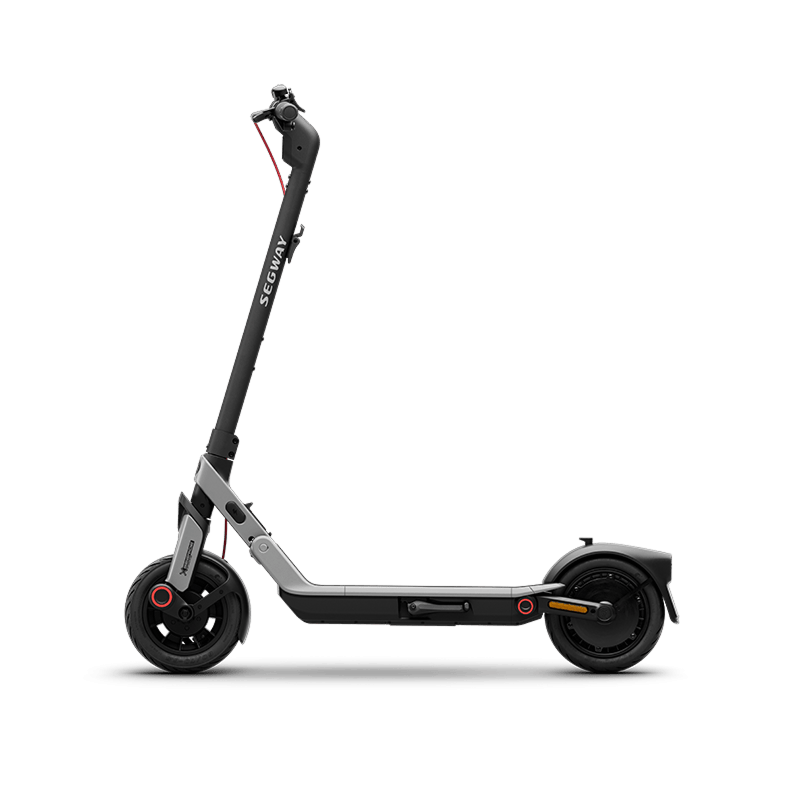
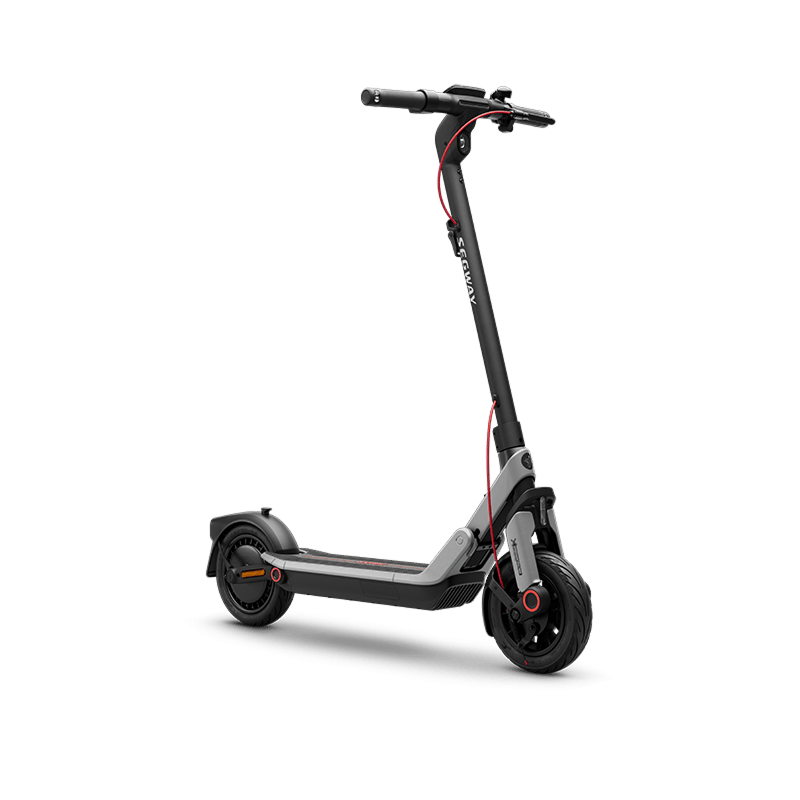
The E3 Pro makes sense as an upgrade from the $399 KQi 100F. For $200.99 more, you get 368 Wh instead of 243 Wh, rear suspension and 10-inch tubeless tires. The whole scooter weighs 1.3 pounds more. Price and battery capacity both rise by about half.
Segway uses elastomer suspension at both ends, with a front drum brake and rear electronic braking. We'd choose this package over the 100F when suspension at both wheels and more battery capacity are worth the extra $201. The E3's handlebars stay wide when the stem is folded. Its US manual gives a folded width of 22.2 inches, against 7.2 inches for the 100F.
The strongest reason to skip the E3 is Segway's MAX G2. At its listed $629.98, it costs only $29.99 more and has a 551 Wh battery, nearly 50% more capacity than the E3. It also has front hydraulic and rear spring suspension, with 10-inch self-sealing tubeless tires. It weighs 53.5 pounds, adding 13.4 pounds.
For ground-level storage, we'd take the G2's extra capacity at that price. The E3 earns its place when keeping the lift around 40 pounds matters. Its seven-hour listed full-charge time also makes it a better fit for overnight charging than a short stop between trips.
NIU KQi 100F for a smaller budget and less storage space
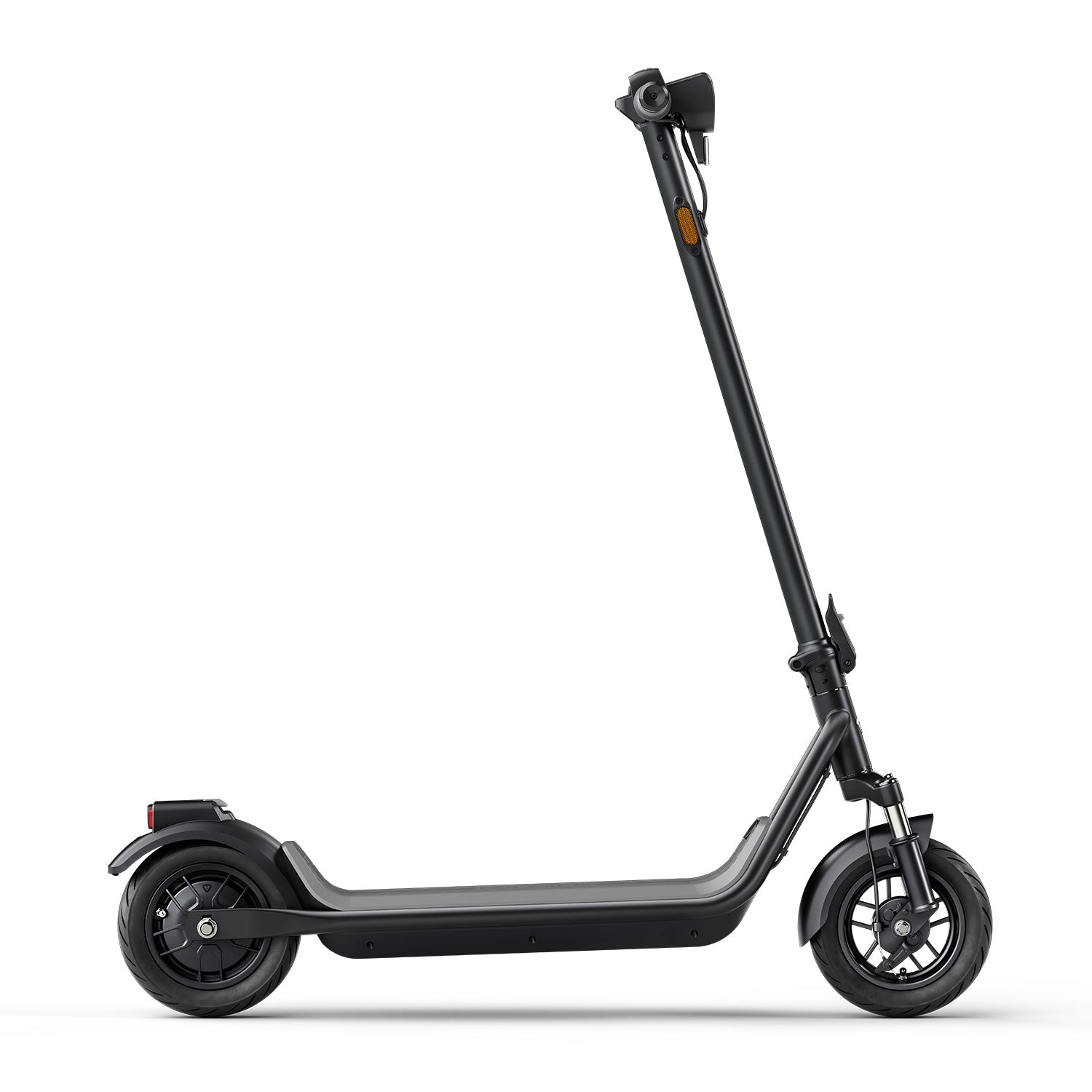
The 100F is the least expensive scooter here, but its most useful distinction may be the handlebar fold. NIU lists a folded width of 184 mm, about 7.2 inches. The E3 Pro is roughly three times as wide when folded. That is a meaningful difference if a wide crossbar blocks the place where you want to keep a scooter.
Folding smaller does not make it light. The 100F weighs 38.8 pounds, almost as much as the E3, and holds 243 Wh. It has a front spring with 36 mm of travel, 9.5-inch tires with inner tubes and a front drum brake backed by electronic braking. It is a straightforward way to spend less without giving up front suspension.
We'd choose the 100F when $399 is the limit or the handlebar fold solves a fitting problem. If you lift a scooter up stairs every day, we'd look at the Air instead. It costs $500 more and weighs 12.6 pounds less.
NIU KQi Air for daily carrying
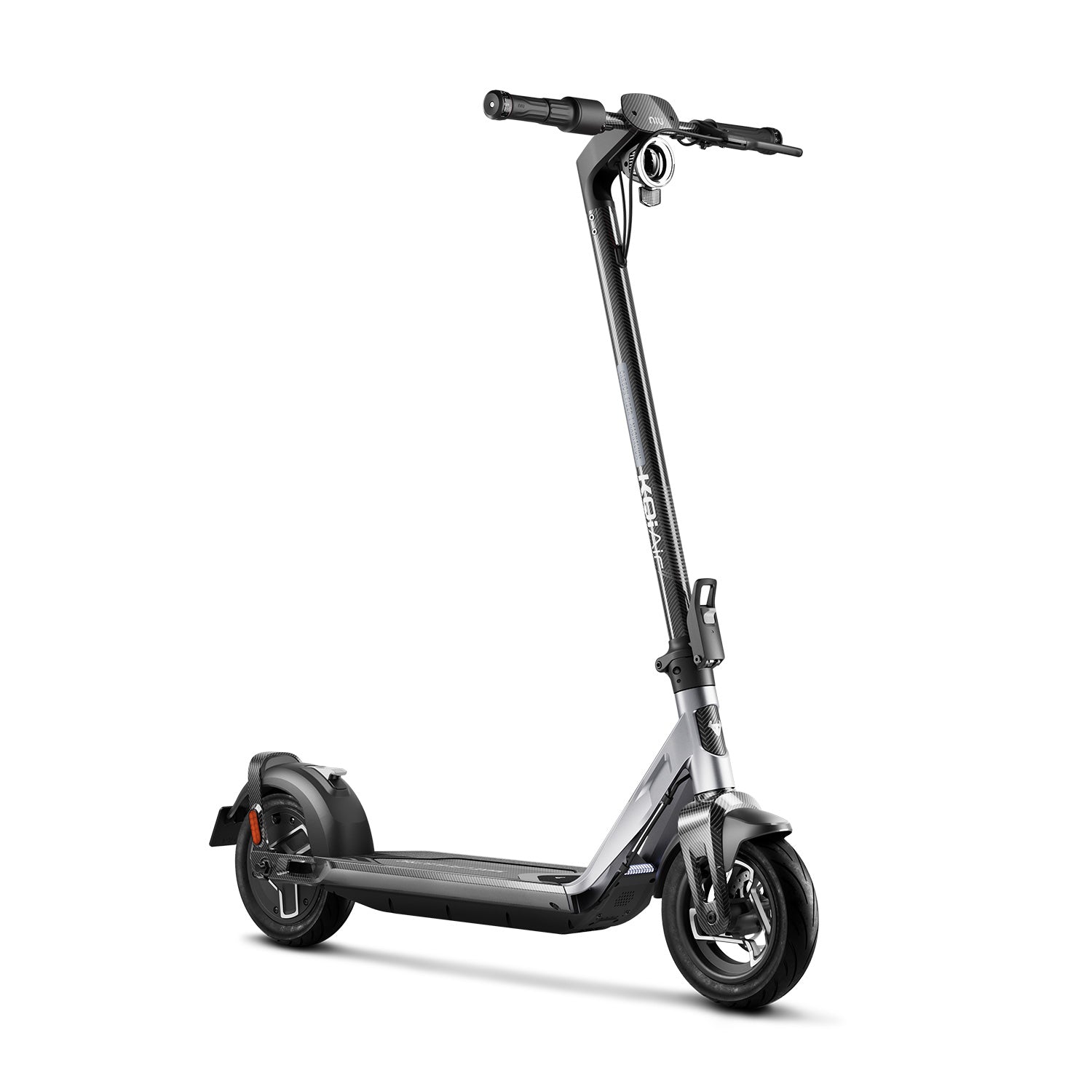
The Air has a larger battery than the E3 Pro at a much lower weight. Its 451.2 Wh battery has 83.2 Wh more capacity, while the whole scooter weighs 13.9 pounds less. That is about 23% more capacity and 35% less weight. The price difference is $299.01.
The Air is easier to justify when you lift the scooter at both ends of a commute. If you mostly wheel it into storage, the low mass does less for you.
The Air has no suspension and uses 9.5-inch tubeless tires. We'd choose it for a route where the low carrying weight matters more than having suspension. If carrying is rare, the E3 is $300 cheaper and has suspension at both wheels. For a narrow gap, compare the 100F's folding grips and 7.2-inch folded width with the space you have.
Segway MAX G3 Plus for its tire and suspension package
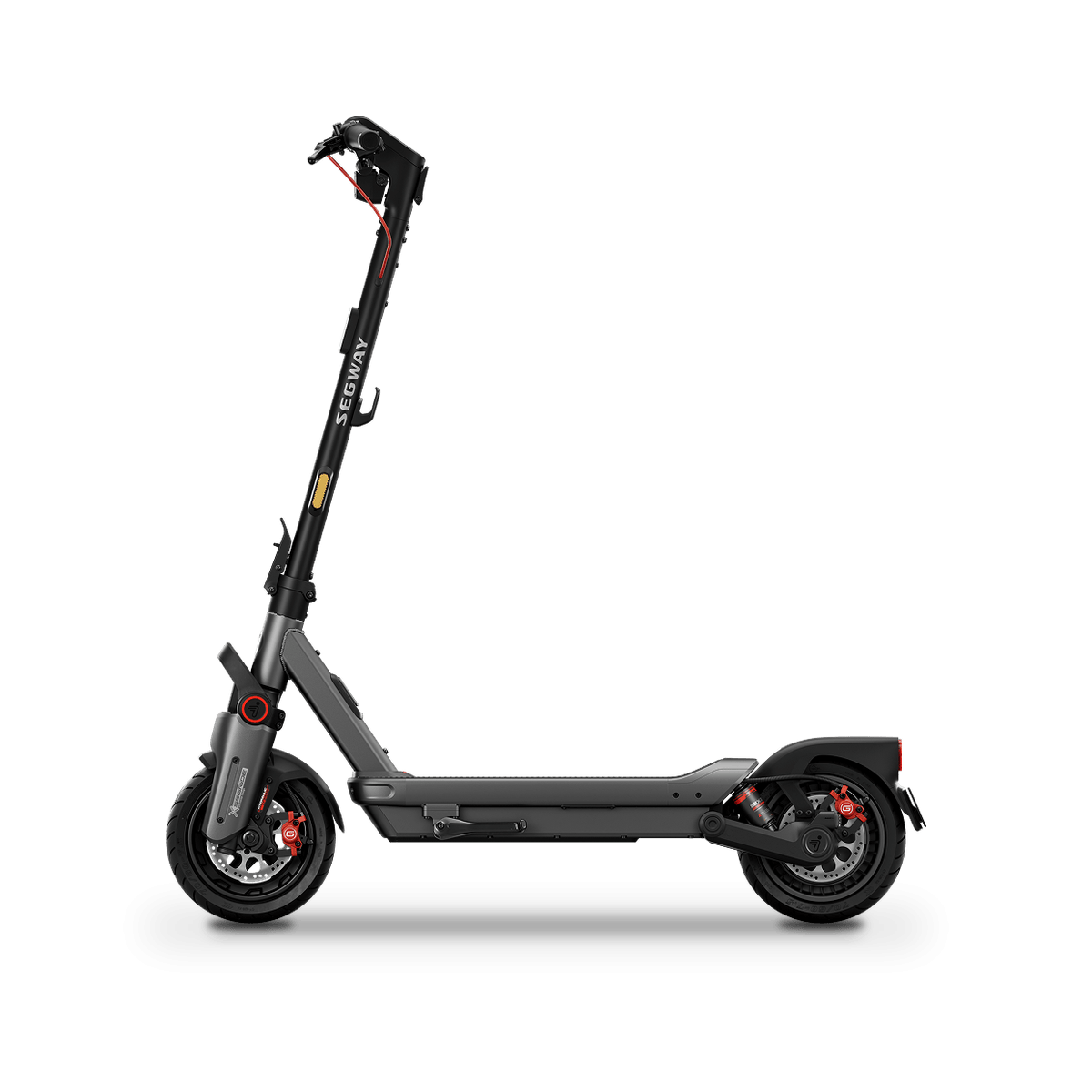
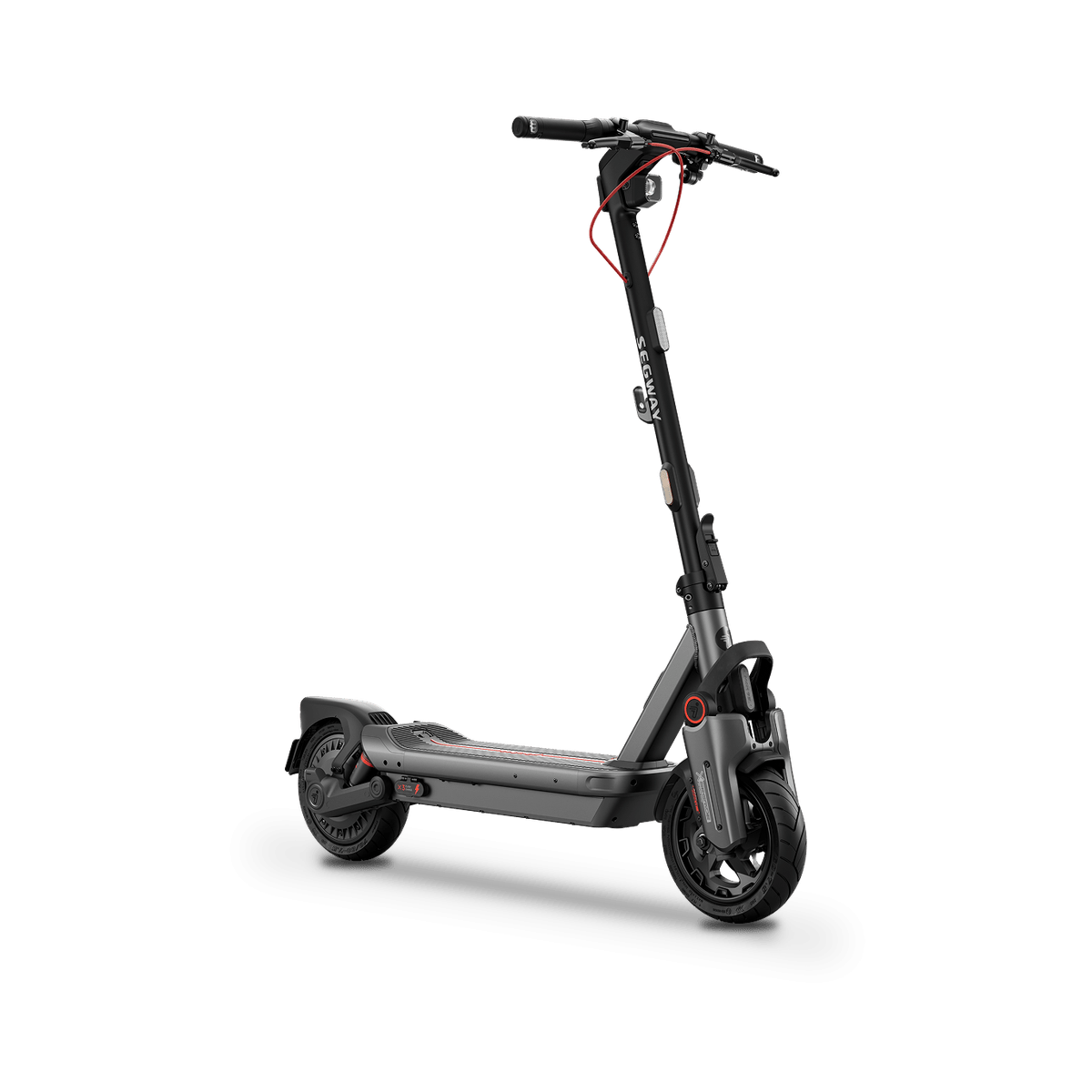
We'd favor the G3 Plus for repeated rough sections on a paved route. Its 11-inch self-sealing tires have a larger diameter than the VMAX's 10-inch tires. A larger wheel meets a given raised edge at a shallower angle, all else equal. Segway also provides hydraulic suspension at both ends, with an adjustable rear system. Hydraulic dampers use fluid resistance to control suspension movement. There is a disc brake at each wheel.
At $1,199.99 and 56 pounds, it sits almost exactly beside the VMAX VX2 Hub LR in price and weight. The VMAX has more battery capacity. The Segway has larger tires, hydraulic rear suspension in place of an elastomer rear system, and a front disc in place of a drum. Both scooters have two mechanical brakes.
It also has a different charging package from the E3 Pro. Segway lists a 717 Wh battery and a four-hour full charge using its 209 W built-in charger, under a 220 V test condition. The E3 has a 368 Wh battery, a 70 W charger and a seven-hour listed full charge. Check the complete charging package and its test conditions when planning a stop between trips.
For the largest battery in this pair, we'd choose the VMAX. Both are over 55 pounds, so the E3 and Air are better candidates if you carry the scooter frequently.
VMAX VX2 Hub LR for more capacity around $1,200
The LR has an 874 Wh battery and weighs 57.1 pounds. Compared with the G3 Plus, that is 157 Wh more capacity for 1.1 pounds more weight. The capacity increase is about 22%, while the weight increase is about 2%. At $1,189.10, it costs $10.89 less.
We'd choose the LR over the G3 Plus when battery capacity is the priority. It has 10-inch tubeless tires, front oil suspension and a rear elastomer system. A front drum and rear disc provide two mechanical brakes with separate levers. The G3 Plus is the alternative for buyers who specifically want 11-inch self-sealing tires and hydraulic suspension at both ends.
Select the 56-mile LR option. The 44-mile SR has a smaller 624 Wh battery and a different price. The official product data lists the LR at $1,189.10.
This recommendation starts with a need for more capacity. For a shorter route or frequent carrying, we'd spend less on a smaller scooter. The LR is a better fit when its 57.1 pounds can stay mostly on its wheels.
What should change your choice
Separate carrying from fitting into storage
Check how much you want to lift and where the folded scooter will fit. The 100F folds to 7.2 inches wide and still weighs 38.8 pounds. The Air saves more than 12 pounds against it, but the 100F's folding grips solve a different problem. Measure the space where the scooter will go, then decide how much weight you want to carry to get it there.
Use battery capacity for the comparison it supports
Watt-hours measure stored energy. A higher capacity can support a longer ride, but speed, load and terrain determine how quickly you use it. If range is the deciding requirement, look for a measured ride at a speed similar to yours.
Check the charger and the charging window
The E3 and G3 comparison shows why battery size alone is a poor way to predict charging time. Compare the included charger and the manufacturer's full-charge figure for the exact scooter. A faster optional charging setup is a separate purchase decision. The G3's three-hour dual-charge claim uses a separate adapter sold as an accessory. Segway ties both that figure and the four-hour single-charge figure to a 220 V supply.
A spare charger belongs in the budget if you need one at work. NIU lists the 100-series replacement at $39.99 and the Air-compatible replacement at $89.99. The 100-series charger was sold out when checked. Confirm the exact compatible model before adding one.
Check the vehicle rules before buying
New York defines an e-scooter as having a maximum design speed of 20 mph and limits riding to 15 mph. California's DMV also lists a 15 mph riding limit. The G3 Plus has a 28 mph setting and the VMAX is sold as a 34 mph scooter. These specifications should be checked against the rules for your route.
For electrical safety, look for certification to UL 2272, the standard covering a scooter's electrical system, and match the certification to the exact model.
How we chose
We compared the exact US models using manufacturer specifications, manuals and listed prices. We calculated the changes in battery capacity and whole-scooter weight, then assessed what those differences mean for carrying, storage and the hardware a buyer receives.
Sources
- Segway E3 Pro US specifications
- Segway E3 Series US manual, model 051902U
- Segway MAX G3 Plus US specifications, model 051602U
- Segway current US store prices
- NIU KQi 100F specifications and folded dimensions
- NIU KQi Air specifications
- VMAX VX2 Hub selected LR specifications
- VMAX VX2 Hub official variant data
- Segway MAX G2 US specifications and price
- NIU KQi 100-series replacement charger
- NIU Air-compatible replacement charger
- New York Attorney General vehicle requirements
- California DMV motorized scooter rules
- UL 2272 electrical-system standard